
Health of Large Marine Ecosystems - MMEDs
|
Health of Large Marine Ecosystems
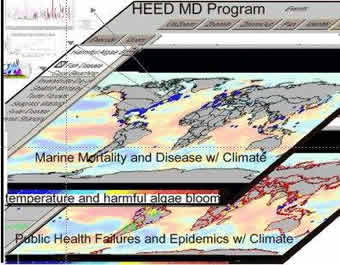
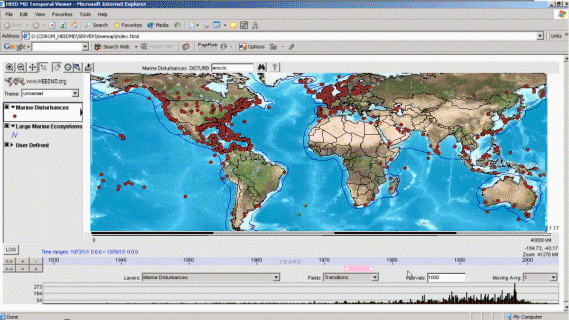
A first approximation global survey of morbidity, mortality and disease using the 8 functional disturbance categories is provided. The accompanying maps and lists of occurrence types are not meant as a comprehensive review of the health of the world's marine ecosystems, but rather suggest a starting point for a more complete survey. To illustrate the worldwide extent of available data or lack of survey information, large marine ecosystems (LMEs) are used for data aggregation (Sherman and Alexander 1989). Detailed global data, if available from the HEED (1998) survey, are also provided.......... MORE |
|
Many LMEs are stressed from the growing depletion of fisheries resources, coastal zone degradation from erosion and over-development, habitat damage, and excessive nutrient loadings and pollution from drainage basin effluents (Sherman and Duda, 1999). Using the 8 disturbance types as a guide, the health of the LMEs appear to be further impacted by the growing number of morbidity, mortality and disease events. Considerable effort will be required to quantify the frequency and extent of these impacts on the health of all 50 LMEs. MORE |
MORE |
The documentary evidence systematically provided since 1972 indicates that HABs are increasingly problematic and their duration and numbers are increasing (Smayda and Shimizu 1993, Harvell et al. 1999). General explanations of why the frequency and distribution of HABs may have increased during the last three decades are given in Smayda (1990) and Harvell et al. (1999). Harmful algae blooms disturb ecosystems in three primary ways, through direct exposure of wildlife and humans to algal biotoxins, indirect exposure through the food chain and by contributing to hypoxic conditions that may lead to anoxia.
MORE |
||
|
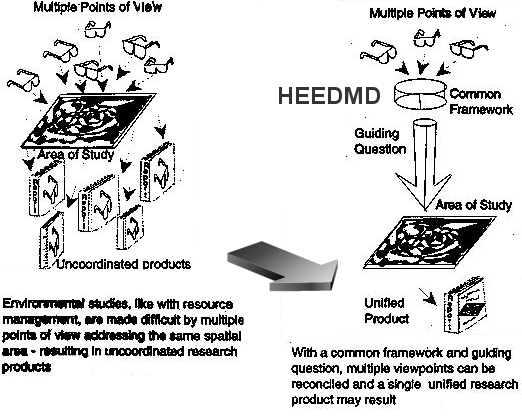
Basis for Assessing the Health of Large Marine Ecosystems Chronic illnesses, mass mortality and disease epidemics are being reported across a wide spectrum of marine taxonomic groups. Novel occurrences involving pathogens, invasive species and illnesses affecting humans and wildlife are globally distributed and appear to be increasing. These disturbances impact multiple components of marine ecosystems, disrupting the structural and functional relationships among species and the ability of systems to recover from natural perturbations. Climate change involving extreme events combined with human induced stressors may compromise an open-ecosystem or migratory population's resistance to opportunistic micro-organisms. Fungi, bacteria and viruses are quick to exploit the weak within a disturbed enclosed-ecosystem and eventually create suitable environments for continued proliferation. Assessments using a marine epidemiological approach can track these changes in ecosystem health (Epstein 1996). Better understanding of the natural history of disturbance regimes requires the inventory and reconstruction of event time-series. Time series allow multiple marine ecological disturbances to eventually be classified as Major marine ecological disturbances (MMEDs). The number and frequency of MMEDs in a place can be used as indicators of a decline in ecosystem health and loss of essential services (e.g. economic, nutrient cycling). Reconstructing a natural history of these events and related environmental conditions facilitates a better understanding of the local, regional and global causes of disturbance. MMEDs can be mapped using geographic information systems to define spatial "hotspots" and temporal clusters of events (e.g., during El Niño events). Reconstructed time series have helped researchers identify eight general impact categories based upon the spatial and temporal dynamics of the observed disturbances. Assuming the appropriate observational meta-data information (noting source and quality) are available, resource stewardship agencies and research institutions can work on standards to better define regionally more appropriate or optimal indicators for characterizing each of the sub-disturbance types for ecosystem health assessment. Data collected using a marine ecosystem health framework depicts an increase in the frequency, severity and geographic spread of MMEDs over the past several decades. These adverse biological events carry with them significant human health and economic costs. International institutions can use the ecosystem health framework presented in this chapter for assessing the health and consequence of disturbance within large marine ecosystems. Initial assessments could be followed by improved monitoring and surveillance followed by focused basic laboratory and field research. With new insight, early warning systems to enhance response capability to ecosystem health disturbances could be initiated, and coordinated mitigating actions taken, to address the underlying forcing factors leading to disturbance. The combined HEED retrospective data mining and GMNET integrated multi-jurisdictional monitoring approaches could be applied beyond their present scales to include morbidity, mortality disease and comparative health assessments among the 50 large marine ecosystems. Standard global characterization is particularly important due to the uncertainties surrounding the cause and consequence of marine disturbance and the unknown origin and distribution of many disturbance types. In many cases complex physical, chemical and ecological processes, for which mechanistic understanding is lacking, mask both human and climate influences. By taking a global, LME-scale perspective, natural, human induced impacts and the synergy of forcing factors resulting in marine disturbance can be better separated and understood. This will remain as an important challenge for marine science in the coming millennium. |
||||
<!--end content -->